 Mt Ijen Tours
Ijen Blue Fire: What You'll Actually See
Last reviewed August 2026
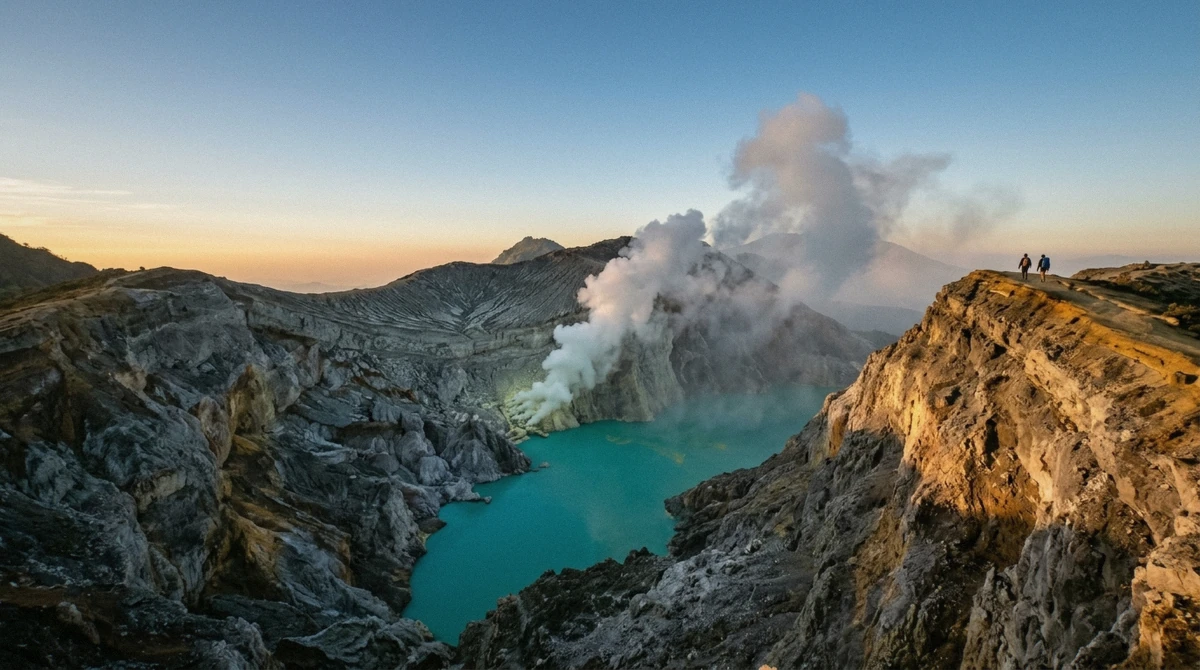
Ijen blue fire is ignited sulfuric gas burning at the crater floor of an active volcano in East Java, one of only a small handful of places on Earth where the flames are visible at a scale you can walk up to. It is not always the wall-of-fire spectacle shown in documentary photography; a typical night delivers patches of flame among the vents rather than a continuous blue curtain, and cloud or wind can hide even that. As of August 2026, access to the crater floor is decided daily on gas readings after the trail reopened on 26 February 2026, so the honest answer to whether you'll see it starts with checking the current status before your date.
Quick answer
The Ijen blue fire is sulfuric gas igniting on contact with air at the crater floor, burning blue and visible only in full darkness, roughly between 2 and 4 am. It is not a promise of a wall of flame; most dry-season nights show some flame in the vents, and the tall, continuous displays in professional photography come from lucky nights, not typical ones. As of August 2026, the trail reopened on 26 February 2026 and the descent runs on a daily gas-reading approval, so confirm the current status with your operator the day before you go.
Key takeaways
- The flames are ignited sulfuric gas, visible only between roughly 2 and 4 am, never in daylight
- The trail and crater-floor access reopened 26 February 2026 after safety checks, decided daily on gas readings
- Access can shrink to a 500 m radius from the gas source on cautious days
- Most dry-season nights show some flame; the tall documentary walls are lucky-night territory, not the typical trip
- The rim view alone, without the descent, still delivers the crater lake and sunrise
- Cloud and wind hide the flames more than rain does; check the current best months for your clearest odds
Mount Ijen Night Treks Compared
Prices read from the listings in August 2026; each of these three runs the same night window described below, from a private option among the Ijen private tours to a shared departure among the Ijen sunrise trek tours.
 from $86Shortest Night Run
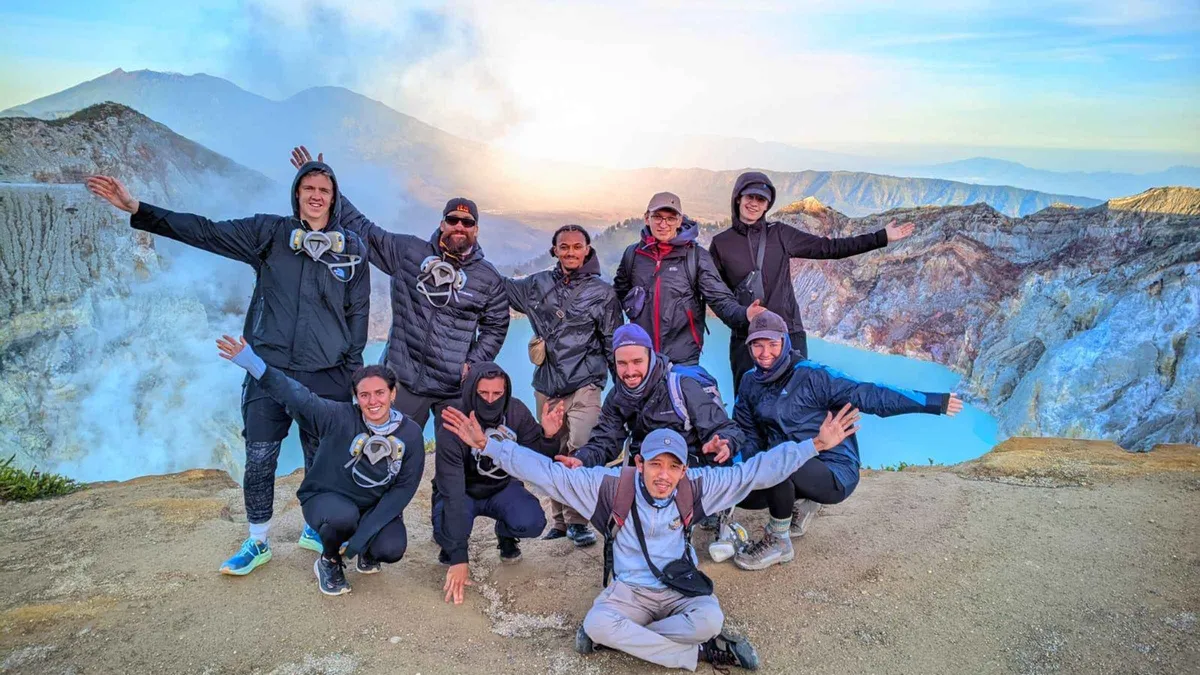
 Banyuwangi: Ijen Volcano Blue Fire Private Night Tour
Listing details checked 2026-08-06
Six hours door to door from Banyuwangi: night drive up, blue fire descent, sunrise, back by breakfast. The leanest private Ijen tour on the platform.
Check Availability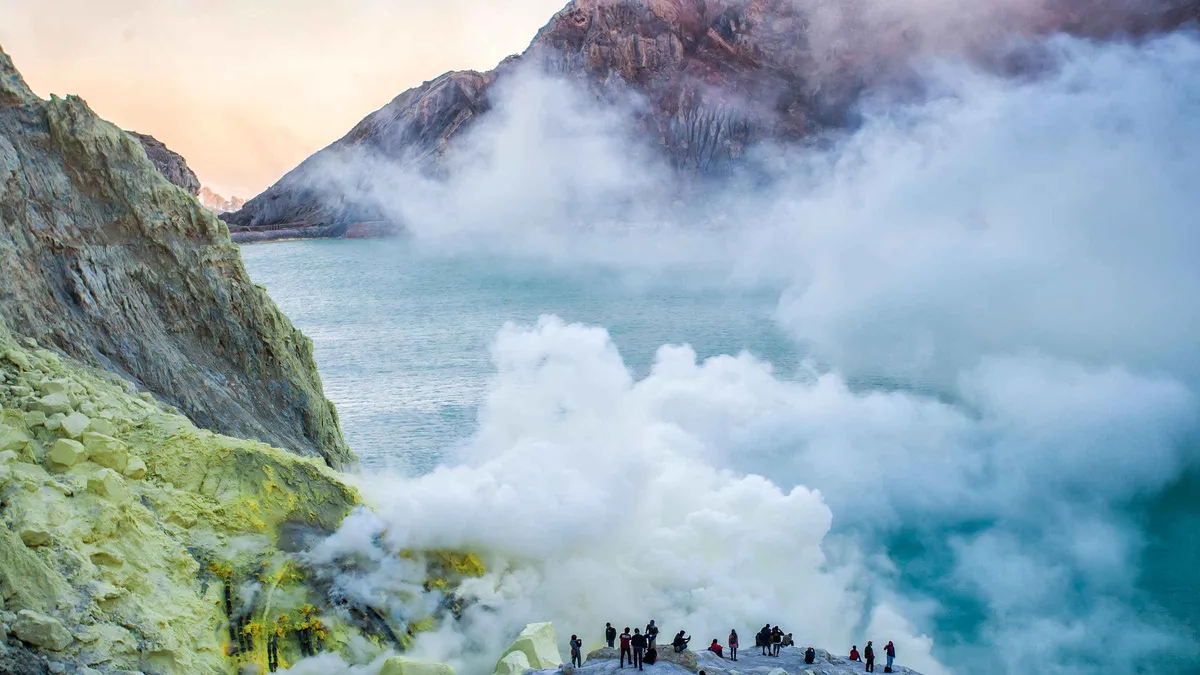 from $100.39Dinner & Room
 From Bali: 24-Hour Kawah Ijen Blue Flames, Dinner & Room
Listing details checked 2026-08-06
Leaves Bali at 1 pm, feeds you dinner, gives you a hotel room until the midnight start — the only from-Bali Ijen tour where you sleep before the…
Check Availability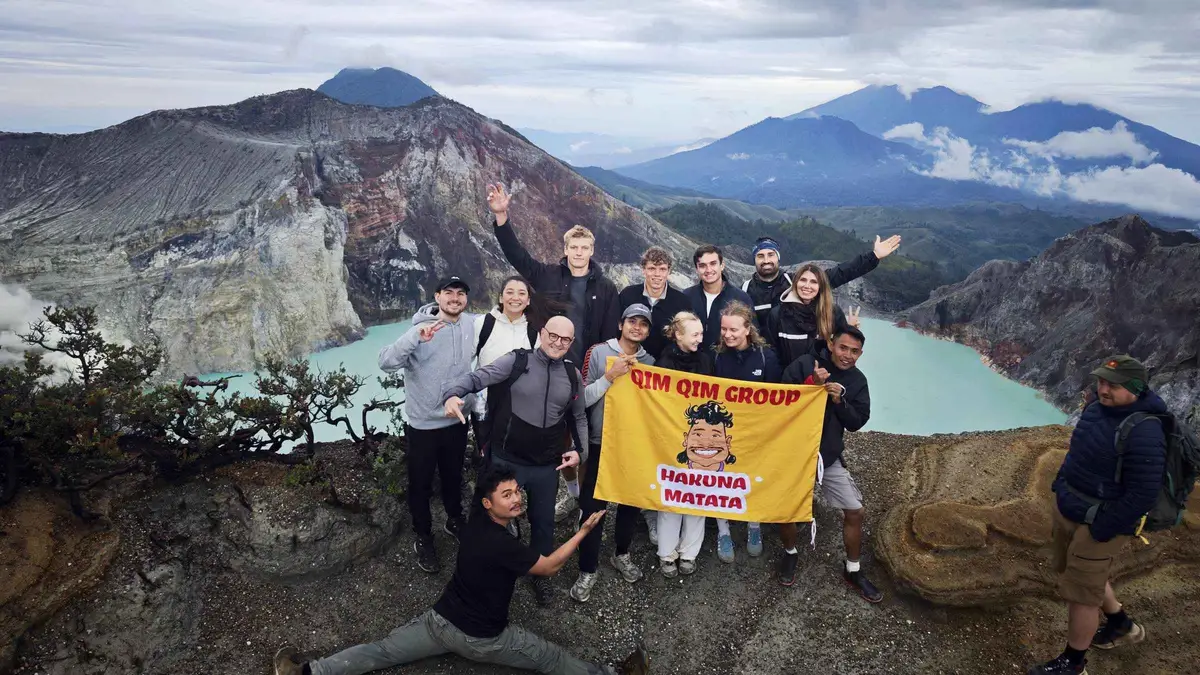 from $12.80#1 Seller
 Ijen Volcano Sunrise Tour with Pickup & Professional Guide
Listing details checked 2026-08-06
The best-reviewed Mount Ijen tour on GetYourGuide: 1,863 reviews at 5.0, run by local guide Haqim (QimQim) with fast-track entry and a coffee break at the sunrise viewpoint.
Check AvailabilityWhat the Blue Fire Actually Is
Gas, not lava
The blue fire at Kawah Ijen is not molten rock. It is sulfuric gas escaping the crater floor under high pressure and igniting the moment it meets oxygen in the air, burning with flames that reach a few metres tall in the most active vents. The chemistry is the same reaction that gives a gas stove its blue flame, scaled up to a volcanic crater and running around the clock.
What makes Ijen unusual is not the chemistry but the access. The gas ignites in daylight too, but the flame is invisible against the sun; it only becomes visible to the eye once full darkness sets in, which is why every trek here runs between roughly 2 and 4 am rather than at dawn. Very few places on the planet combine this phenomenon with a trail a traveller can walk to, which is the entire reason people fly in for a single night's hike.
Is the Blue Fire Open Right Now?
Status checked August 2026
The trail and crater-floor facilities reopened on 26 February 2026 after a period of official safety checks. Since then, whether the descent to the flames runs at all is decided daily, based on gas readings from Indonesia's volcanology agency (PVMBG), which tracks the site's alert level between Normal and Advisory. On cautious days, access can shrink to a 500 m radius from the gas source, keeping hikers back from the vents even when the rim itself stays open.
In early January 2026, ground reports described stretches of nights where the flames were effectively invisible, a reminder that "open" and "flames visible" are two separate questions. The practical move, on every date, is to confirm the current status with your operator the day before departure rather than relying on anything published weeks in advance.
The Night, Hour by Hour
Every tour on this catalog runs on close to the same clock, built around when the flames are actually visible.
-
23:00
Pickup in Banyuwangi
Hotel pickup for the shared or private car up to Paltuding basecamp, roughly 1,850 metres up the switchbacks.
-
02:00
Gates open at Paltuding
The park allows hiking from 2:00 am to 2:00 pm; earlier arrivals queue at the gate rather than start climbing.
-
~03:30
Arrival at the crater rim
The 3.5 km trail gains about 600 metres to the rim near 2,386 metres, roughly 1.5 hours at an average pace.
-
~25 minutes
Descent to the crater floor
Steep and unrailed, shared with miners carrying loads down the same path; barred for asthma, heart conditions, vertigo and pregnancy.
-
02:00 to 04:00
The flame-viewing window
Flames are visible only in full darkness; a 3:00 am start at the gate still leaves time at the crater floor before the light returns.
-
05:00 to 05:30
Sunrise over the crater lake
Timing shifts slightly by month; hikers who skip the descent entirely still make this view from the rim.
What You'll Actually See
Honest tiers, not a promise
The lake, the sunrise and the miners at work are close to a sure thing on any trip that reaches the rim. The flames themselves sit on a sliding scale, from a few visible flickers to the rare full display, and the table below uses the same honest language throughout.
| Sight | When | How likely |
|---|---|---|
| Crater lake and sunrise | Any trip that reaches the rim by dawn | Nearly every clear night |
| Miners working the crater floor | Nightly, regardless of flame conditions | Nearly every clear night |
| Some blue flame in the vents | Dry-season nights with clear, calm skies | Most dry-season nights |
| Tall, continuous walls of flame | Clear, windless nights, more often in the driest months | Lucky nights |
| Flame across the whole crater floor | Rare atmospheric alignment | Rare |
Why the flames vary night to night
Cloud and wind hide the flames more often than rain does; a still, clear night in the wet season can outperform a windy, overcast night in July. Miners working the crater floor sometimes damp sections of flame deliberately to protect the sulfur they are collecting that night, which has nothing to do with the weather at all. Both factors mean the flames are genuinely variable in a way the lake and the sunrise are not.
Flame odds through the year
Cloud and wind decide more nights than the calendar does, but the season sets the baseline. This is how the odds stack across the year, assuming the descent is open on your night.
| Window | Flame odds | Why |
|---|---|---|
| April to June | Good | Dry air arriving, thinner crowds, clear pre-dawn skies |
| July to August | Good but crowded | Driest nights of the year, the viewing ledge fills early |
| September to October | Good | Dry season holding, crowds easing |
| November to March | Poor to fair | Cloud sits on the crater, rain delays gate openings |
Expectations vs Reality
The Documentary Shot
- Tall, continuous walls of blue flame across much of the crater floor
- Long-exposure professional photography stretches the flame's apparent size further
- Requires a clear, windless, lucky night, often stacked with ideal camera settings
- The image most people arrive expecting to photograph themselves
A Typical Night
- Patches of flame flickering in a handful of vents, smaller and less continuous
- Some nights dimmer than others, or partly hidden behind drifting gas
- Miners sometimes damp sections on purpose, independent of the weather
- The sunrise, the acid lake and the miners themselves still deliver regardless
Verdict Plan for a typical night and let the documentary shot be a bonus if the sky cooperates, not the reason the trip succeeds or fails.
The Sulfur Miners
The human story behind the flames
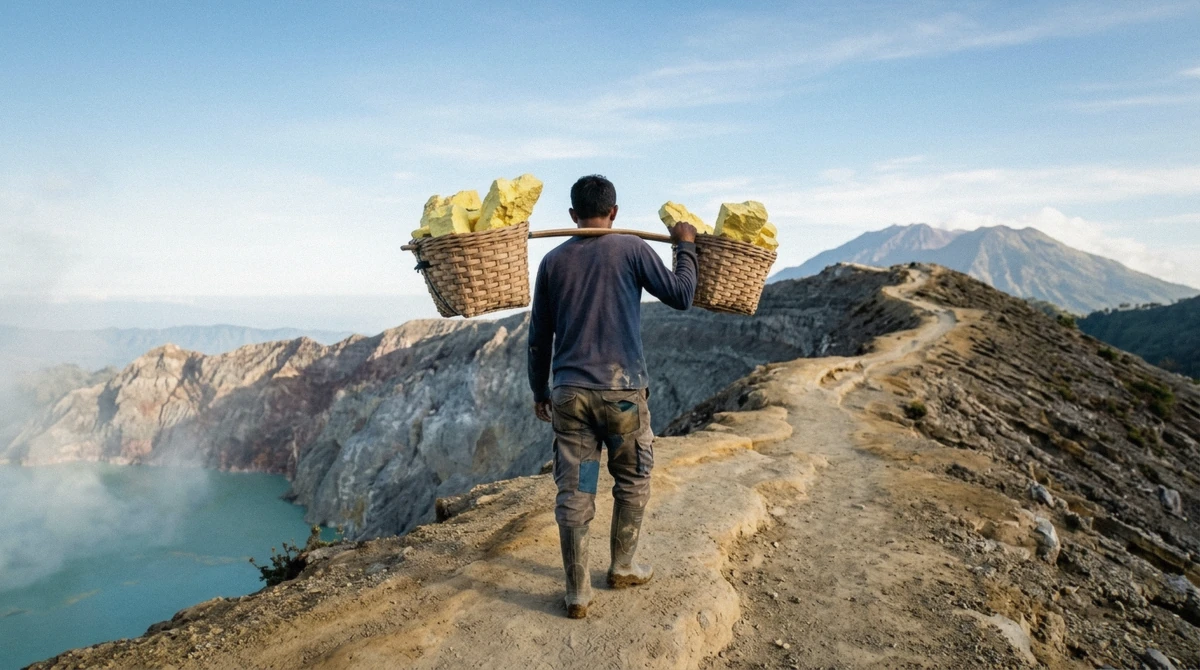
The Ijen sulfur mine has operated since 1968, and the men working it carry loads of raw sulfur up the same trail hikers use, sometimes as much as 90 kg on a single trip, one or two trips a day. They work through the night, close to the same flames tourists come to see, and give way is expected to run in their favour on the trail, not the other way around.
Ask before photographing anyone at close range, and expect to be asked for a small tip in exchange for a photo or a piece of sulfur; it is a normal part of the mountain's economy, not a scam. The full picture of the mine and the men who work it, including where it fits into the wider Ijen story, sits on our homepage's miners section.
The Crater Lake Beneath the Flames
The other reason people come
Below the flames sits the crater lake itself, roughly 1 kilometre wide and 200 metres deep, with a pH near 0, making it the world's largest highly acidic crater lake. The volcano last erupted in 1999, and the lake's turquoise colour by daylight is as much a draw as the flames are by night. You cannot swim in it or touch it; the acidity is genuinely corrosive and entry is banned for good reason.
Photographing the Flames
What actually gets a usable shot
A tripod and a high ISO setting are close to non-negotiable if you want the flames to look like more than a faint smear. Phone cameras, even recent ones, struggle badly with a scene this dark and this contrasty; most phone shots of the flames disappoint compared to what the eye actually sees standing there.
Batteries drain fast at the near-freezing temperatures on the rim and at the crater floor, so a spare kept warm in an inner pocket is worth the extra weight. Avoid swapping lenses in the gas cloud itself; sulfur particulate gets into open camera bodies quickly. Set your exposure and lens choice before the descent if you can, and treat the crater floor as a place to shoot, not a place to fiddle with gear.
Seeing It Without the Descent
The rim-only night, honestly
The descent from the rim to the crater floor is roughly 25 minutes, steep and unrailed, sharing the path with miners carrying heavy loads in the dark. It is barred outright for hikers with asthma, heart conditions, vertigo or pregnancy, and it is a reasonable choice to skip even if none of those apply.
Staying at the rim still delivers the crater lake, the sunrise between 5:00 and 5:30, and often a distant glow from the flames below even without the close-up view. It is the honest fallback for anyone who decides on the night that the descent isn't for them, and no tour requires it as a condition of the trip.
Blue Fire Questions
What causes the flames to disappear on some nights?
Cloud cover and wind hide the flames far more often than rain does, and miners sometimes damp sections of flame on purpose to protect the sulfur they're collecting that night. Any one of those can turn a promising forecast into a quiet night at the crater floor.
Is Kawah Ijen currently closed?
No, the trail and crater-floor facilities reopened on 26 February 2026, though the descent runs on a daily gas-reading approval and can shrink to a 500 m radius from the gas source on cautious days. Confirm the exact status with your operator the day before your trek.
How close can I actually get to the flames?
On a normal night, close enough to feel the heat from a few metres away, standing near the active vents. On restricted days, access holds back to a 500 m radius from the gas source, which keeps the flames visible at a distance rather than up close.
Do the miners really work through the night next to the flames?
Yes, carrying loads of raw sulfur that run up to 90 kg, sometimes twice in a single day. They've worked the mine since 1968 and give way is expected to run in their favour on the shared trail.
Can I see the blue fire without doing the crater descent?
You can see a distant glow from the rim on some nights, but the close-up view requires the roughly 25-minute descent. Anyone who skips it for safety reasons still gets the crater lake and sunrise from the rim.
Is it safe to photograph the flames up close?
It's the same descent everyone takes: steep, unrailed, and best done slowly with a headlamp and, ideally, trekking poles. Avoid opening your camera body at the crater floor itself, since fine sulfur dust gets into seams and lens mounts fast.
How many places in the world have blue fire like this?
A small handful, and Ijen is by far the most accessible one on foot. What sets it apart is not just that the flames exist but that a marked trail lets hikers walk to within a few metres of them.
Go in with the honest version of the night rather than the postcard version, and the trip rarely disappoints. If the flames turn out modest on your date, the lake, the sunrise and the miners' work are still the same trek worth doing. The full lineup of Mount Ijen night treks compared sits on our homepage, price by price, and for the fuller picture of cost and whether the whole trip clears the bar, our honest look at whether Ijen is worth it covers the rest, alongside the best months for clear skies.