 Mt Ijen Tours
What to Wear and Bring for the Ijen Hike
Last reviewed August 2026
Knowing what to wear for the Ijen hike starts with a relief: tours already provide the gas mask, the entrance fee and a guide, so the list left on your side is short. The local hook that decides most of it is temperature, not fashion; the crater rim sits at 0°C to 12°C before dawn and climbs to 22°C to 30°C by the time you're back at the basecamp, so the outfit you start in is not the outfit you finish in. As of August 2026, everything below matches what the current listings actually include.
Quick answer
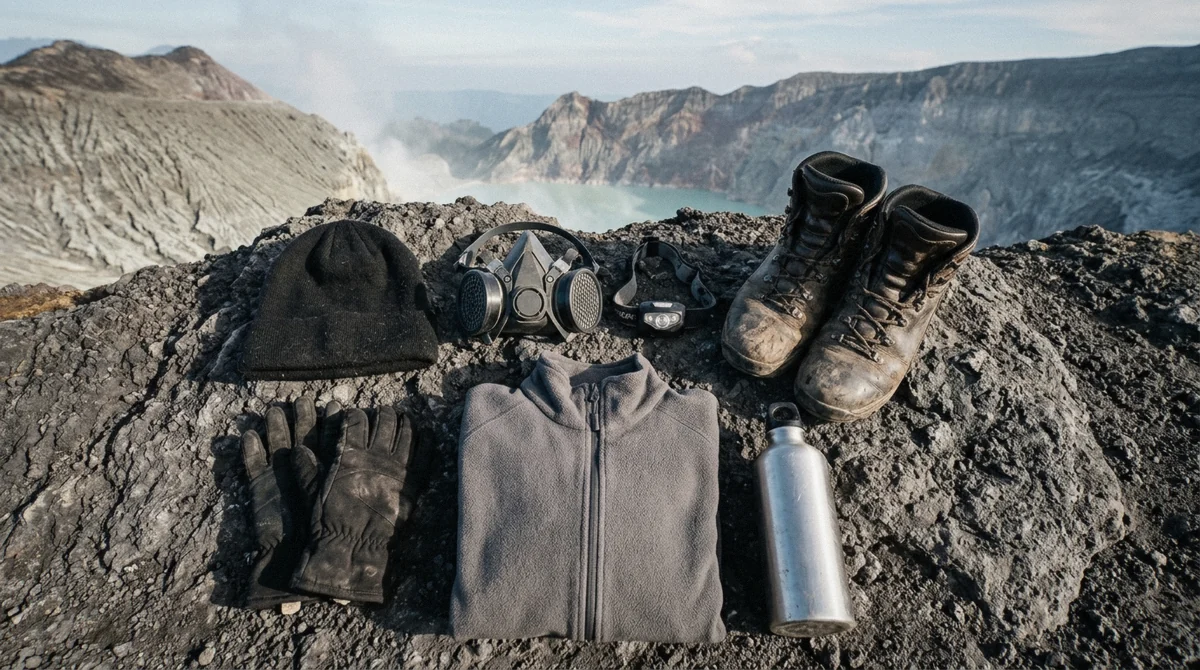
Tours provide the gas mask and the guide; what's on you is a warm layering system for a 0°C start, grip footwear for a sandy, unrailed descent, and a headlamp if your tour doesn't hand one out. Take off silver jewelry before you climb; sulfur air turns it black overnight. Pre-dawn temperatures on the rim run 0°C to 12°C, and closed-toe shoes with real tread are the only footwear that works for the whole route.
Key takeaways
- Tours include the gas mask, entrance and guide; the rest of the list is short
- Dress in layers you can shed: the same hike runs from near-freezing to shirt-sleeve heat
- Skip silver jewelry entirely; sulfur air blackens it overnight
- Pre-dawn rim temperatures run 0°C to 12°C depending on the season
- Real-grip closed-toe shoes or boots, never sandals, for the sandy descent
- Rest posts 3 and 5 sell coffee and instant noodles, so small cash covers a warm-up stop
Mount Ijen Treks to Pack For
Prices read from the listings in August 2026; all three below include the mask and guide the packing list assumes, and you can browse Mount Ijen treks beyond these three among the full sunrise trek lineup.
 from $14.55All-Inclusive
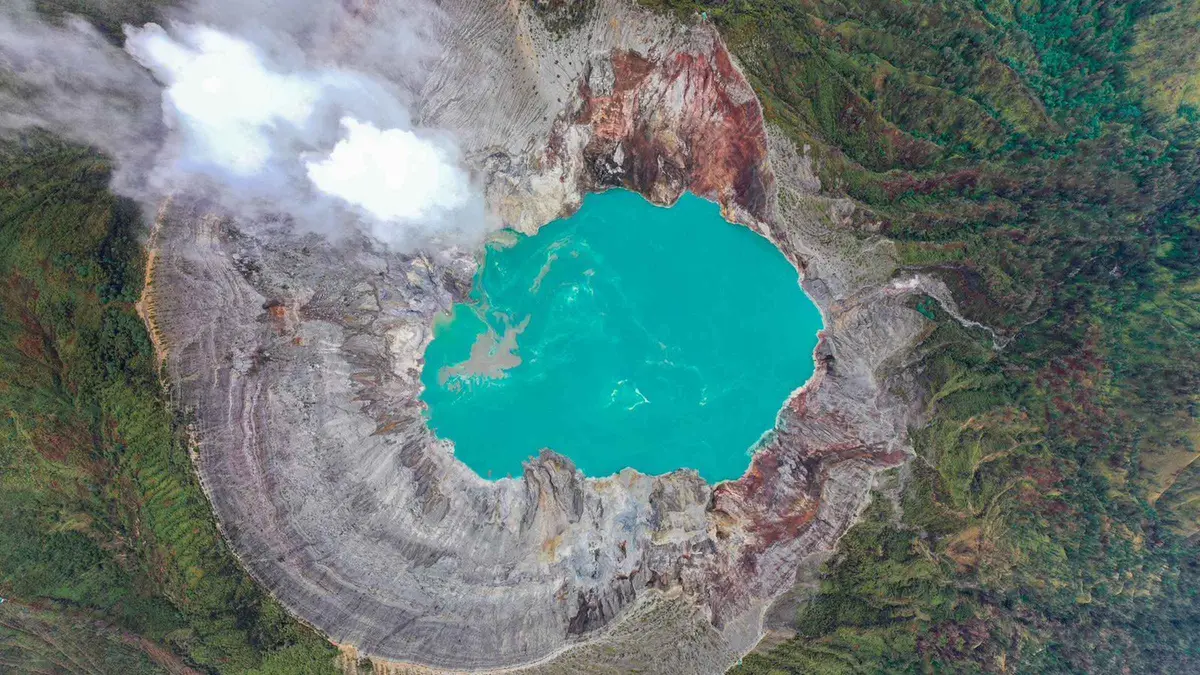
 Banyuwangi or Bali Sunrise Ijen Vulcano Hiking All Inclusive
Listing details checked 2026-08-06
Sunrise trek with pickup from Banyuwangi or Bali, all fees paid: entrance, health check appointment, gas mask and breakfast are inside the price.
Check Availability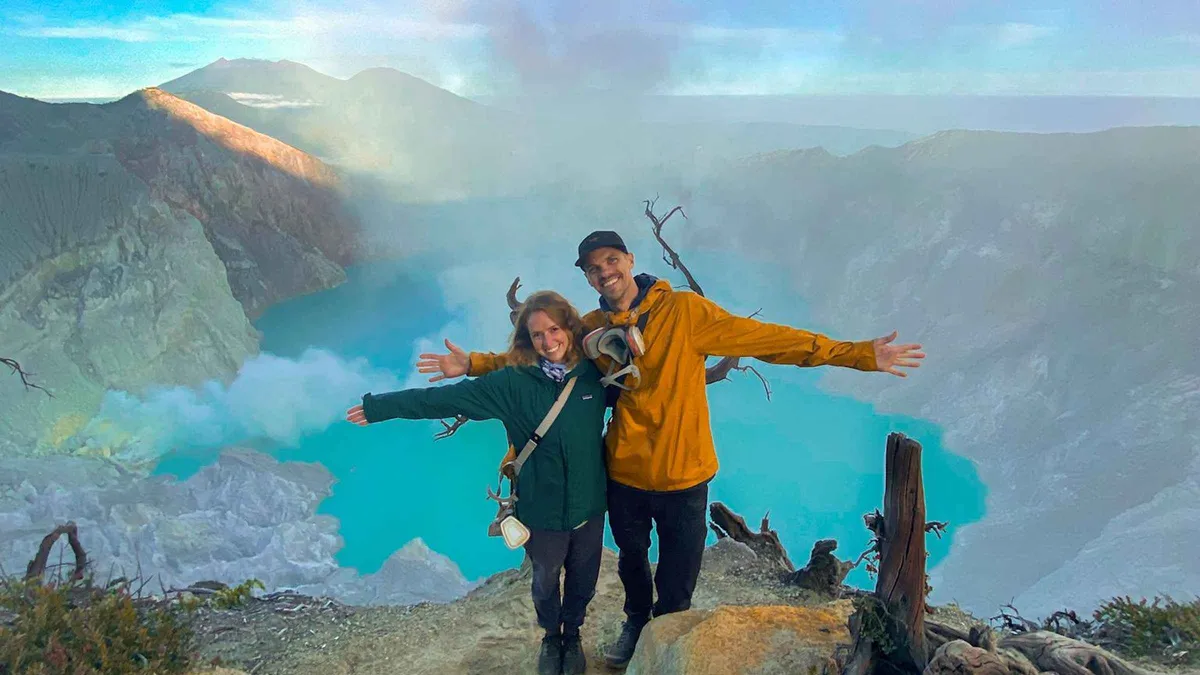 from $12.31Cheapest Trek
 Kawah Ijen Volcano Midnight Trek & Sunrise Experience
Listing details checked 2026-08-06
Midnight pickup in Banyuwangi, crater rim by 3:30 am, blue fire if the gas allows, sunrise over the acid lake. Entrance, gas mask and guide are in the…
Check Availability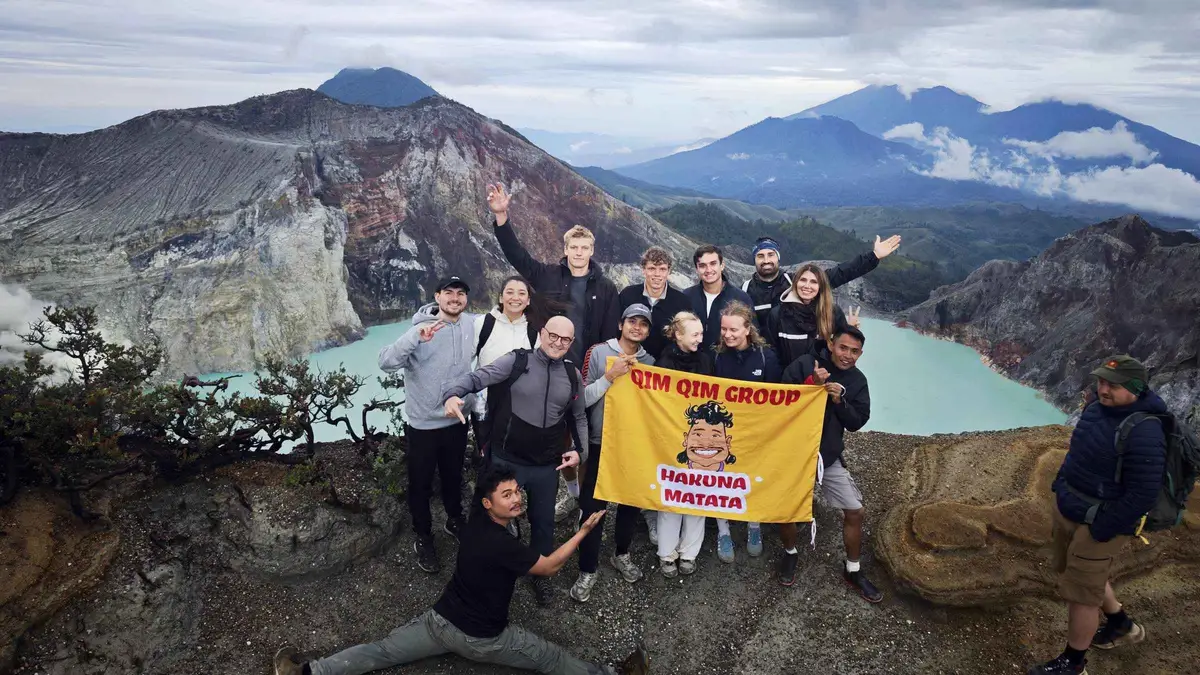 from $12.80#1 Seller
 Ijen Volcano Sunrise Tour with Pickup & Professional Guide
Listing details checked 2026-08-06
The best-reviewed Mount Ijen tour on GetYourGuide: 1,863 reviews at 5.0, run by local guide Haqim (QimQim) with fast-track entry and a coffee break at the sunrise viewpoint.
Check AvailabilityWhat to Wear
Base Layer
A quick-dry base layer, long-sleeve top and long trousers, does the real work here. Cotton holds sweat against your skin through the climb and then goes cold the moment you stop moving at the rim, which is exactly when you want to be warmest. Synthetic hiking layers or merino wool dry faster and hold heat better through the temperature swing described above.
Windproof Outer Layer
A light windproof jacket or fleece goes over the base layer for the climb and the wait at the rim. This is not a serious mountaineering jacket; Ijen's summit sits around 2,799 metres, cold enough to need a real layer for an hour or two, not cold enough to need down insulation.
Beanie and Gloves
A beanie and a pair of light gloves feel out of place packing for a tropical country, but they earn their spot. At 0°C to 12°C before dawn, hands and ears are the first things to go numb while you wait for the flames, and neither item weighs enough to notice in a daypack.
Footwear
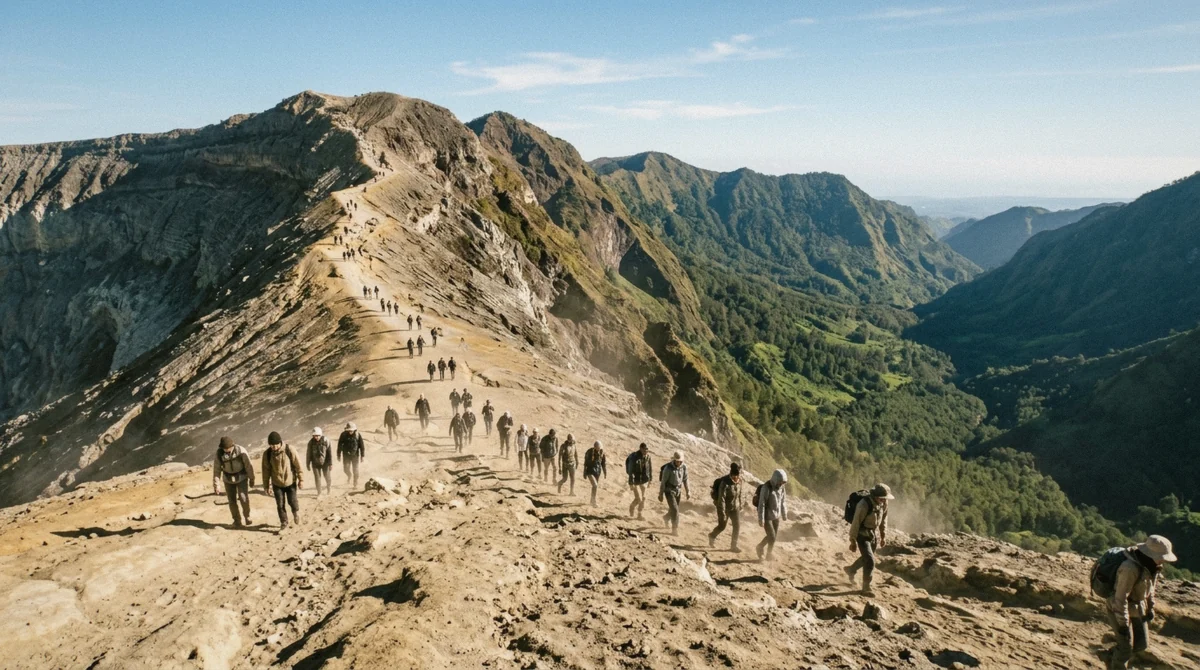
The trail is 3.5 kilometres of sandy, uneven ground with roughly 600 metres of elevation gain, and the descent to the crater floor is steeper, unrailed and shared with miners carrying loads. Closed-toe hiking shoes or boots with real tread are the only footwear that covers the whole route safely.
Sneakers with decent grip work for the approach trail but struggle on the loose, steep descent. Sandals and worn-smooth trainers are the most common regret in trip reviews; they slip on the sand and offer nothing on the rockier stretches near the crater. Trekking poles are available to rent at the base and are worth the small cost on the way down.
Color Guide
Does it matter what color you wear on Ijen?
Less than on a wildlife trip, but a few choices genuinely help or hurt in the dark, in sulfur haze, or in daylight heat.
| Color | Good? | Why |
|---|---|---|
| Black | Good for the night climb | Hides sulfur dust and soot smudges from the gas; less ideal once the sun is up and heat builds |
| White | Bad | Shows dirt and sulfur staining fastest of any color, and offers no advantage in the dark |
| Bright or neon | Good | Keeps you visible to your guide on a crowded, dark, unrailed trail |
| Earth tones | Fine | No wildlife-shyness concern here; earth tones are simply practical against dust and grime |
| Cotton (any color) | Bad | Stays wet with sweat and goes cold at altitude regardless of what shade it is |
| Quick-dry synthetic | Good | Dries fast on the climb and keeps you warmer once you stop moving at the rim |
The one rule that matters most
Fabric choice affects your comfort far more than color does on this hike. A dark, quick-dry layer beats a light-colored cotton one every time the temperature drops at the rim.
What to Bring
The 8 to 12 items worth packing
This is the checklist worth screenshotting before you leave your hotel.
- Headlamp with spare batteries, cold drains batteries fast at the rim
- Small cash in rupiah, posts 3 and 5 sell coffee and noodles
- Refillable water bottle, nothing is sold at the crater itself
- Light gloves and a beanie, pre-dawn rim runs near 0°C
- Windproof outer layer, the wait at the rim is the coldest part
- Change of dry clothes for the return car, you will sweat through the climb
- Backup glasses if you wear contacts, sulfur haze stings the eyes
- Sunscreen, the daylight walk down is a different climate entirely
- Small daypack, everything above needs somewhere to ride
- Phone or camera in a protective case, dust and moisture on the trail
What Ijen Tours Provide (So You Don't Overpack)
Reading the actual listings, not a generic packing blog
All 18 tours on this catalog include the gas mask, the guide and the entrance fee. Beyond that, inclusions vary by listing, which is exactly what the table below is for.
| Item | Usually Provided | Bring Your Own | Notes |
|---|---|---|---|
| Gas mask | Yes, on every listing | No | Paper pharmacy masks do nothing against SO₂; the fitted mask included with the tour is the one that matters. Renting one alone at the gate runs about 40,000 IDR |
| Entrance fee | Yes, on every listing | No | Foreigners pay 100,000 to 150,000 IDR if arranging entry alone; tours fold it into the price |
| Guide | Yes, on every listing | No | tour-2, Epic Escapes Indonesia, carries English, Indonesian and Malay guiding |
| Headlamp | Sometimes | Recommended as backup | Not listed as included on any of the three above; bring your own to be safe |
| Breakfast | Only on tour-3 | Otherwise, yes | tour-3's all-inclusive listing folds breakfast and the health-check appointment into the price |
| Health certificate appointment | Only on tour-3 | Otherwise, arrange separately | Mandatory since 6 January 2024; most operators expect you to have already handled it |
| Drinking water | First bottle on some listings | Extra water beyond that | Nothing is sold at the crater itself; posts 3 and 5 sell drinks and snacks |
| Transport | Yes, on every listing | No | Shared AC car from Banyuwangi hotels is standard across tour-1, tour-2 and tour-3 |
| Trekking poles | No | Rentable at the base | Not bundled into any listing; worth the small rental fee for the descent |
| Warm layers, gloves, beanie | No | Yes, always | No listing includes clothing; this is entirely on the traveler |
What NOT to Wear or Bring
The reviewers' recurring regrets
Sourced from what operators actually flag and what travelers report getting wrong.
- Silver jewelry, including rings: a single night of sulfur air tarnishes silver black, and it doesn't come off with a quick polish
- Paper or pharmacy-style masks: they do nothing against SO₂; the fitted mask that comes with the tour is not optional
- Sandals or open-toe shoes: no grip on the sandy descent, and a real injury risk near the unrailed crater edge
- White or light-colored clothing you care about: sulfur dust and soot stain fast and permanently
- Drones: flying one near an active volcanic site without a permit risks confiscation and a fine
- Contact lenses without a backup pair of glasses: sulfur haze stings the eyes badly enough that some hikers switch mid-hike
Packing by Season in Ijen
Dry season (April to October)
The rim runs 0°C to 8°C before dawn in these months, the coldest window of the year. A proper windproof layer, beanie and gloves are worth carrying even though you'll be shedding them all by mid-morning. Full details on how the season affects blue-fire odds and crowds sit on our best time to visit guide.
Wet season (November to March)
Pre-dawn temperatures ease slightly to 8°C to 12°C, but rain adds a variable dry season doesn't have. Pack a rain shell over the windproof layer and expect the descent to be slicker underfoot, which makes grip footwear even more important than the temperature does.
Photographing the Night
Gear that survives the cold and the gas
A tripod is close to essential if you want the flames to look like more than a smudge; hand-held shots at the shutter speeds this scene needs almost never come out sharp. Batteries drain noticeably faster at 0°C to 8°C, so a spare battery kept in an inner pocket, close to body heat, is worth carrying rather than leaving in a cold bag.
Avoid changing lenses at the crater floor itself; sulfur gas and fine dust get into open camera bodies fast. Set up before the descent if you can, or keep lens changes to the rim, away from the gas.
Packing Questions
Can I wear jeans on the Ijen hike?
No. Jeans don't dry once they're wet with sweat, restrict movement on the steeper sections and go cold fast at the rim. Quick-dry hiking trousers or synthetic leggings under shorts work far better for the temperature swing.
Can I wear shorts on the Ijen hike?
Not for the pre-dawn climb; the 0°C to 12°C rim temperature makes long trousers the better call for the ascent. Shorts are fine for the daylight walk back down, once the temperature has climbed toward 22°C to 30°C.
Do I need my own headlamp?
Bring one if you can. Headlamps aren't listed as a guaranteed inclusion on every tour, and the trail runs in full darkness from the 2:00 am gate opening through the descent. A backup headlamp costs little to pack and solves a real problem if your tour doesn't hand one out.
Will my phone or camera survive the sulfur gas?
Yes, if you keep it in a case and avoid opening it up at the crater floor. Fine dust and gas get into seams and lens mounts; the safer move is setting up any gear you need before the descent and limiting exposure once you're down there.
What should a woman wear on the Ijen hike?
The same layering system as everyone else: quick-dry base layer, windproof outer layer, beanie, gloves and grip footwear. There's no separate dress code for the hike itself; the temperature swing and terrain drive every choice on this list regardless of who's wearing it.
Is the Ijen hike cold?
Yes, at the start. The rim sits at 0°C to 12°C before dawn depending on the season, cold enough that a beanie and gloves genuinely help. By late morning, back near the basecamp, the same day runs 22°C to 30°C.
Do I need real hiking boots, or will sneakers work?
Sturdy sneakers with real tread get most people up and down safely, but boots with ankle support are the safer call for the steep, unrailed descent to the crater floor, especially in wet season when the sand turns slick.
Do I need hiking shoes for Ijen?
You need footwear with real grip, and hiking shoes are the safest answer: the trail is sand over rock, and the descent slides underfoot. Sturdy trainers with fresh tread get people up every night; sandals and smooth soles are the recurring regret in traveller reviews. If you plan the steep drop to the flames, treat proper hiking shoes as required rather than recommended.
None of this list is complicated. Layer for near-freezing at the rim, grip footwear for the descent, and leave the jewelry and the paper masks at the hotel. The mountain provides the mask and the guide; everything above is just the rest of the equation.
Travellers arranging the climb on their own rather than through an operator should also check what going without a tour actually involves before packing.